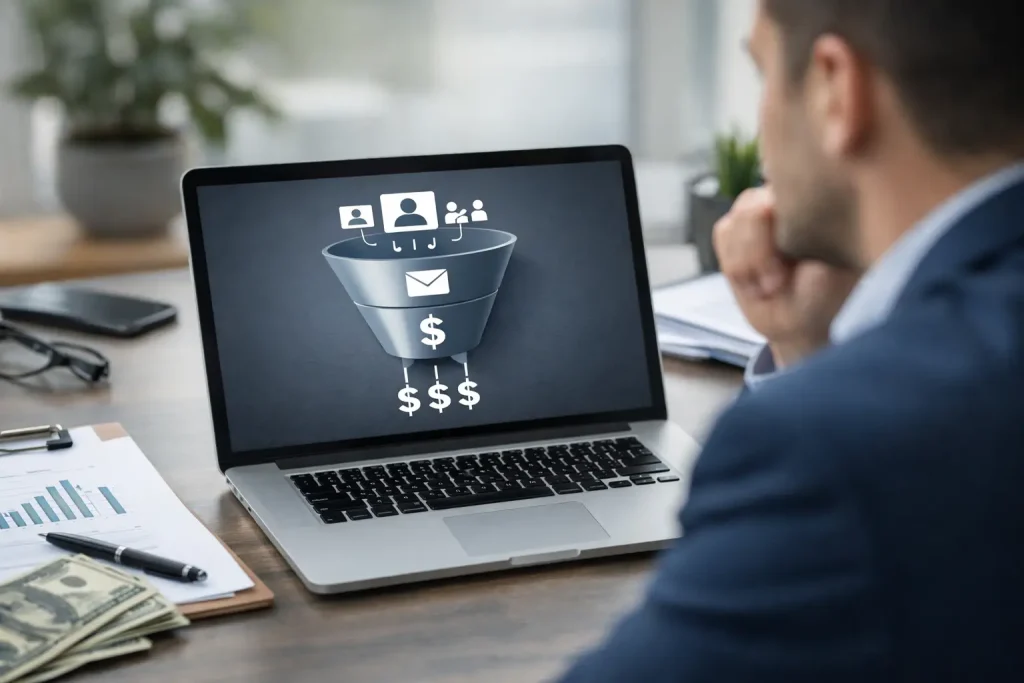

Low-ticket affiliate marketing creates a frustrating math problem. You can spend hours making posts, answering messages, and chasing clicks, then earn a commission that barely covers your ad spend. Done for you webinar funnels offer a different path: send prospects into a presentation built to educate, build trust, and introduce a higher-value offer while your follow-up system keeps working after they leave the page.
That sounds attractive because it is. But a webinar funnel is not a magic money machine you plug into and ignore. The right system can reduce the technical workload and give you a faster route to list building and high-ticket commissions. The wrong one can leave you buying traffic to a generic presentation with weak messaging, no audience fit, and no real plan for follow-up.
The opportunity is real. So is the need to evaluate what you are actually getting.
What Done for You Webinar Funnels Actually Do
A webinar funnel is a conversion system, not simply a recorded video. It starts with a traffic source, such as Facebook ads, short-form social content, email promotions, or a partner referral. That traffic reaches a registration page where visitors exchange an email address for access to a training, case study, workshop, or presentation.
After registering, prospects see a confirmation page and receive reminders by email or text. They attend a live session, watch an automated webinar, or view an on-demand training. The presentation identifies a problem, demonstrates a credible solution, handles common objections, and leads to an offer. People who do not buy enter a follow-up sequence designed to continue the conversation.
Done for you webinar funnels package much of that infrastructure for you. Depending on the offer, that may include the landing pages, webinar presentation, email sequence, tracking setup, ad angles, and a product you can promote as an affiliate. For a beginner, this can remove weeks of struggling with page builders, webinar software, copywriting, and automation rules.
The value is leverage. Instead of explaining the same opportunity one prospect at a time, you direct people to an asset that can make the core presentation repeatedly. Instead of losing every visitor who is not ready to purchase immediately, you add qualified leads to an email list you can continue to serve.
The Biggest Advantage: Higher-Value Sales Without Building a Product
Affiliate marketers often hit a ceiling because they promote offers that pay $10, $25, or $50 per sale. At those commission levels, you need volume. A lot of volume. That usually means more content, more followers, more outreach, or more ad spend.
A webinar changes the economics when it presents an offer with enough value and commission potential to justify the cost of acquiring a lead. If a qualified buyer can generate a few hundred dollars or more in affiliate commission, you do not need dozens of tiny sales to create momentum.
This does not mean every high-ticket offer is automatically profitable. Higher prices require greater trust, a clearer sales message, and better lead quality. But webinars are built for that job. They give prospects time to understand the problem, see the mechanism behind the solution, and decide whether the offer fits their goals.
For solo entrepreneurs, that is a major advantage. You can focus on traffic and audience-building while using a proven presentation structure rather than trying to become a product creator, sales trainer, funnel builder, and copywriter all at once.
The real asset is not just the webinar
A common mistake is treating the webinar as the whole business. It is only the middle of the system. Your real asset is the audience and data you build around it.
Every registration shows interest. Every email open, replay click, and purchase gives you information about what your market responds to. Over time, a growing list gives you more control than relying entirely on a social platform’s algorithm or daily cold outreach.
That is why a good funnel should help you capture leads under your own email marketing account whenever possible. Even if the webinar is supplied by a company or program, you want clarity on who owns the lead relationship and how you can communicate with subscribers afterward.
What to Check Before You Use a Done for You Webinar Funnel
Not all prebuilt funnels deserve your traffic. Before you invest time or advertising dollars, look beyond the polished landing page.
First, inspect the offer itself. Is it solving a real, specific problem for your audience? Can you explain who it is for without using vague income promises? If you would hesitate to recommend it to a friend, do not send paid traffic to it.
Second, watch the webinar from beginning to end. Pay attention to whether it delivers useful teaching before the pitch. A webinar does not need to hide the fact that it sells something. It does need to earn attention, make logical claims, and present the offer honestly. Overhyped claims may produce clicks, but they also create refunds, distrust, and a weak long-term reputation.
Third, ask what can be customized. A fully fixed funnel may be convenient, but it can be hard to stand out when many affiliates use the same pages and ads. The strongest setup gives you room to add your own pre-webinar content, thank-you page messaging, email voice, bonus strategy, or lead-generation angle.
Finally, understand the numbers. You need to know your cost per lead, registration-to-attendance rate, attendance-to-sale rate, refund rate, and commission amount. You do not need perfect data on day one. You do need a basic scorecard so you can tell the difference between a traffic problem, a conversion problem, and an offer problem.
Traffic Still Decides Whether the Funnel Works
A done-for-you system can save you from technical chaos, but it cannot rescue poor targeting. Traffic quality remains the difference between a funnel that creates leads and a funnel that drains a budget.
For beginners, organic content is a smart testing ground. Create short educational posts around problems your ideal prospect already recognizes: low commissions, no email list, inconsistent leads, fear of complicated technology, or lack of time. Then invite interested people to a training that gives them a next step. This creates a natural bridge instead of dropping a random webinar link into every conversation.
Facebook traffic can scale faster, especially when the offer has a clear audience and the webinar addresses a painful business problem. Start small enough that you can learn without panicking over every result. Test one audience, one creative angle, and one registration page message at a time. When you change everything at once, you learn nothing.
Your ad should sell the registration, not force the entire purchase decision. The job is to attract the right person to a relevant training. The webinar and follow-up do the heavier lifting.
Follow-Up Is Where Many Affiliate Sales Happen
Most people will not buy during their first webinar view. They may be busy, skeptical, comparing alternatives, or simply need more time. That is normal. It is also why email follow-up is not optional.
A useful sequence continues the education rather than repeating “buy now” every day. Remind subscribers what they will learn, share a key insight from the training, answer a common concern, and point them to the replay or next session. When the offer has a deadline or bonus, state it clearly without inventing false urgency.
Your personal voice matters here. A done-for-you email sequence may be well written, but adding your perspective can make it more believable. Explain why the training caught your attention, what type of marketer it helps, and who should skip it. Specificity builds more trust than hype.
If you offer a bonus, make it practical and aligned with the buyer’s next step. A simple traffic checklist, onboarding call, campaign review, or implementation guide can be more persuasive than a pile of unrelated digital files.
When a Prebuilt Webinar Funnel Is the Right Move
Done for you webinar funnels make the most sense when you have a legitimate offer, a defined audience, and a willingness to learn traffic and follow-up. They are especially useful if your current marketing depends on manual conversations or low-ticket promotions that demand constant volume.
They are less useful if you expect a funnel to compensate for no traffic plan, no budget, or no understanding of the market. Automation multiplies a working process. It can also multiply a weak one.
Start with one offer and one clear audience. Track the leads, listen to the objections, improve the message, and keep building your list. The marketer who owns attention and follows up consistently has far more options than the marketer who starts from zero every time a social post disappears from the feed.